


Applications of Polyurethane in Medical and Healthcare Equipment
Polyurethane is considered one of the primary materials used in the medical and healthcare industries due to its unique combination of flexibility, durability, and chemical resistance. It is widely used in the production of hospital equipment, medical chairs, beds, support mattresses, as well as disposable components and orthopedic devices.
In the production of hospital and medical beds and mattresses, polyurethane foams with engineered cellular structures distribute the patient’s weight evenly. This feature not only ensures comfort and proper support but also helps prevent pressure ulcers and localized pressure points. The density and firmness of the foams can be adjusted to meet the requirements of different healthcare environments, including intensive care units (ICUs), general wards, and rehabilitation centers.
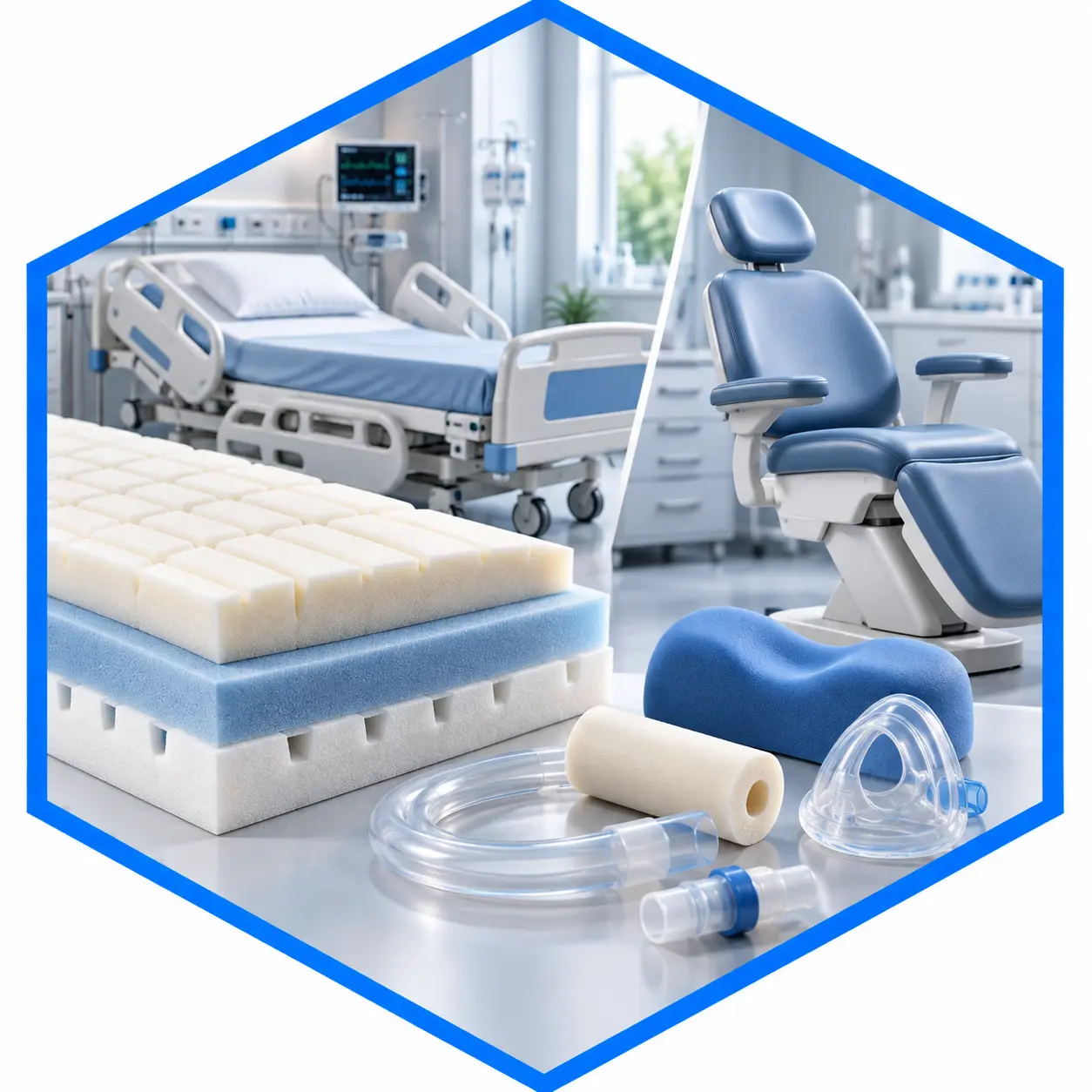
In the manufacture of medical and dental chairs, backrests, and support cushions, polyurethane provides comfort for both patients and healthcare professionals due to its high mechanical strength and excellent resilience. Washable polyurethane coatings that are resistant to disinfectants help maintain the hygiene and cleanliness of medical equipment.
Medical consumables and orthopedic devices such as handles, protective layers, flexible components, and medical tubing are also manufactured using polyurethane. These materials offer good chemical resistance and biocompatibility, withstand thermal and chemical sterilization processes, and provide long service life. In addition, PU foams and elastomers are used in rehabilitation and physiotherapy equipment to produce supportive layers, cushions, and soft flexible pads.
Overall, polyurethane is considered a strategic material in the medical sector due to its combination of comfort, durability, chemical resistance, and sterilization capability. It plays an important role in improving the quality of healthcare services and enhancing patient comfort.