Applications of Polyurethane in the Automotive Industry
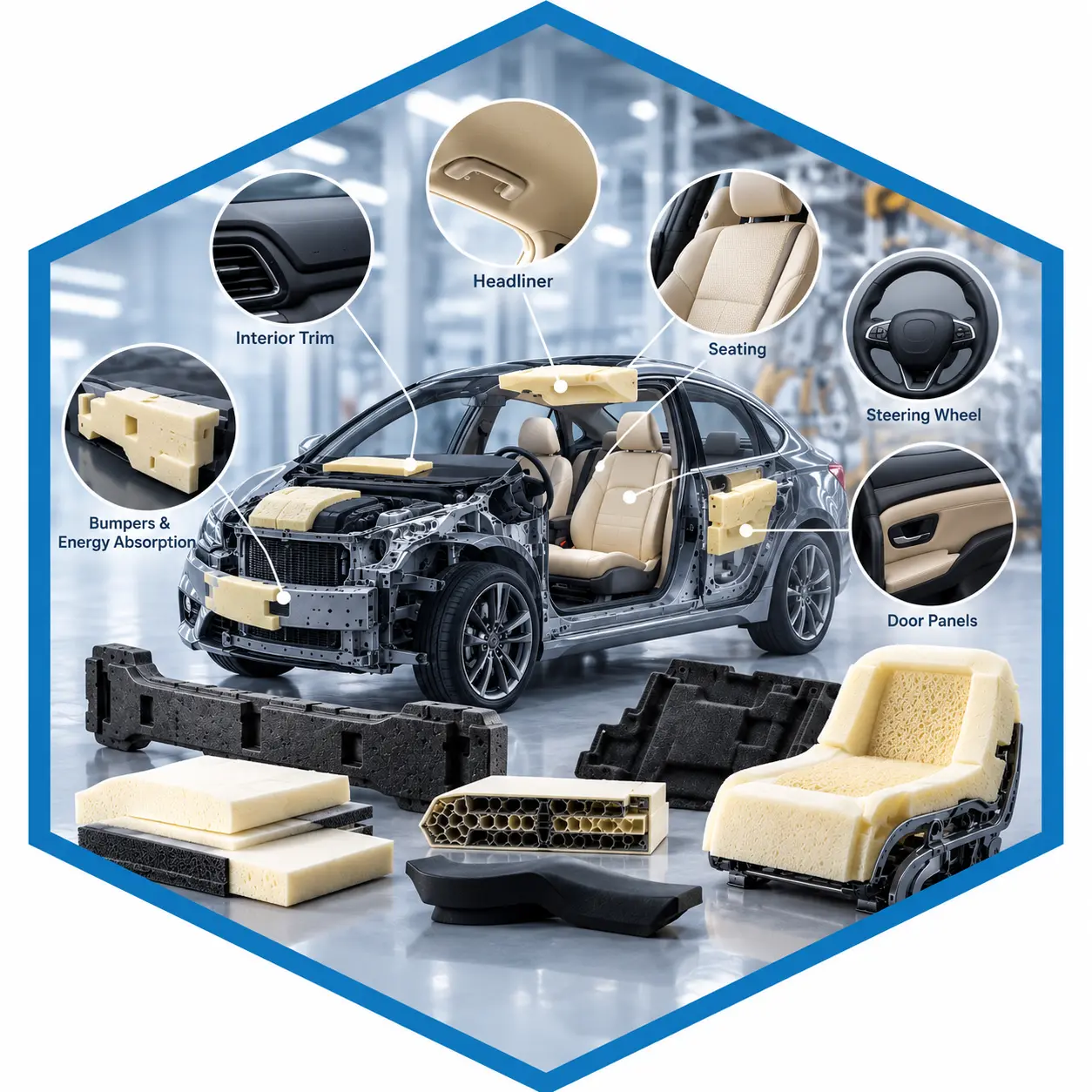
Polyurethane (PU) is one of the most important engineering polymers used in the automotive industry. Due to its structural versatility and the ability to tailor its physical and mechanical properties, it plays a key role in optimizing vehicle performance, safety, and comfort. It is produced through the reaction of polyols and isocyanates, and depending on the formulation, it can be manufactured as flexible foam, rigid foam, elastomers, adhesives, or engineered coatings. High design flexibility and the ability to produce lightweight and durable components have made polyurethane a strategic material in the supply chain of major automotive manufacturers.
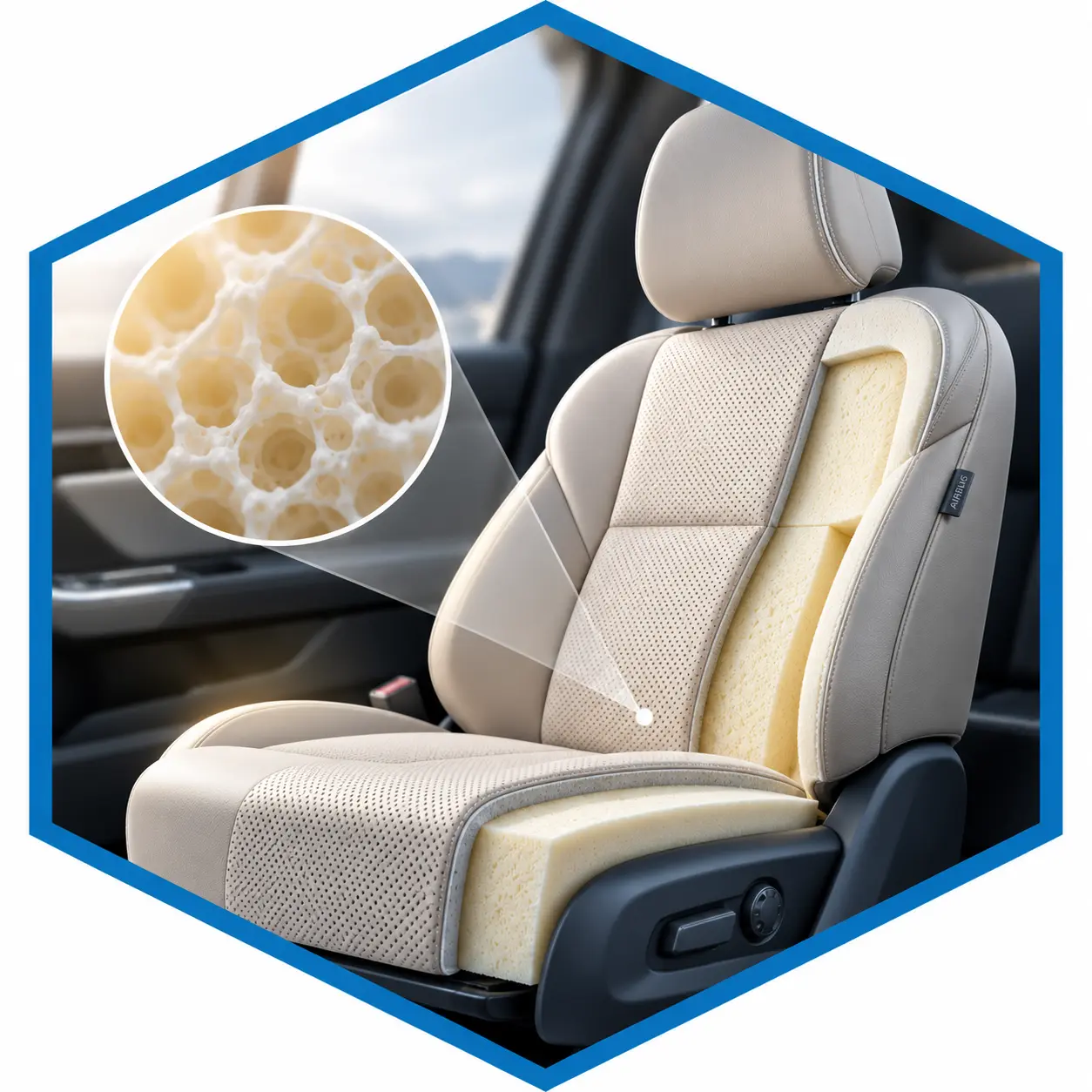
In vehicle interiors, polyurethane is widely used in the production of seat foams, headrests, armrests, and dashboard components. Flexible PU foams provide a balance between softness and strength, enhancing passenger comfort while also enabling effective energy absorption in the event of impact. In addition, rigid and semi-rigid foams are used as thermal and acoustic insulation materials in different parts of the body and cabin, playing an important role in reducing noise and improving driving experience quality.
In exterior and technical components, polyurethane elastomers are used due to their high abrasion resistance and impact strength in the production of bumpers, shock absorbers, bushings, and certain suspension components. Polyurethane adhesives and sealants are also used in windshield bonding, body assembly, and sealing applications, providing strong structural bonding with flexibility. Polyurethane coatings are used to protect surfaces against corrosion, moisture, and environmental conditions.
Overall, various types of polyurethane materials are used in the automotive industry, including flexible foams, rigid foams, PU elastomers, adhesives and sealants, and PU coatings. The growth of electric vehicle production by companies such as Tesla has increased the demand for lightweight, insulating, and high-performance polyurethane materials, as weight reduction and thermal management are critical factors in this new generation of vehicles.
In general, polyurethane, by combining lightweight properties, durability, safety, and design flexibility, remains one of the fundamental materials in the development of modern automotive technologies, and its role in improving energy efficiency and manufacturing quality continues to grow.