


Applications of polyurethane in the railway transportation industry
Polyurethane, due to its high mechanical durability, resistance to shock and vibration, thermal and acoustic insulation properties, and flexibility, is considered an important material in the railway transportation industry. Two-component polyurethane systems enable manufacturers in this sector to produce structural components, protective coatings, flexible parts, and insulation materials for railcars, locomotives, and auxiliary equipment.
In structural and interior components of railcars, PU systems help produce lightweight yet durable materials capable of withstanding mechanical loads, impact, and long-term vibrations. These materials increase the durability and safety of railcars while also reducing structural weight.
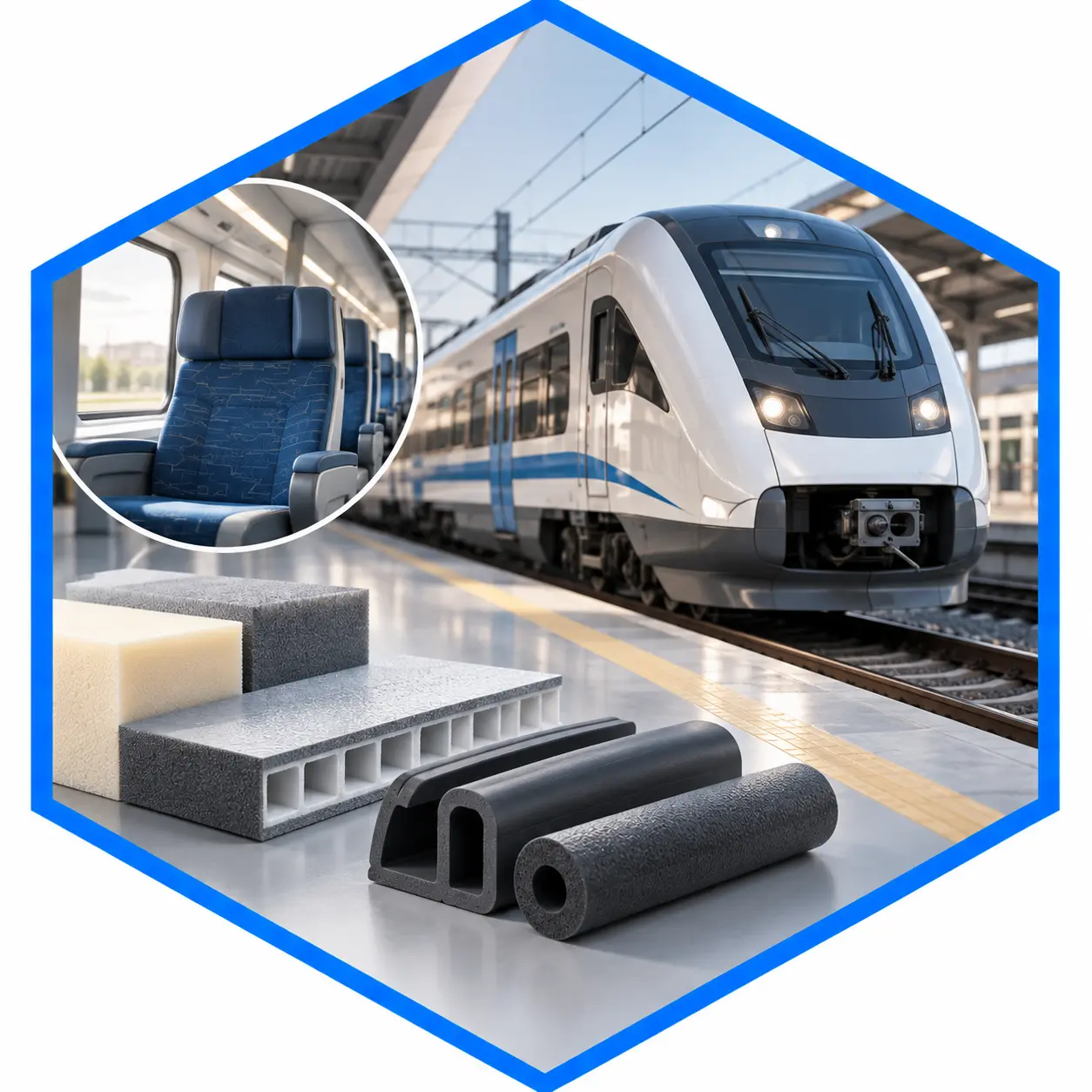
In insulation and protective coatings, two-component polyurethane systems enable the production of materials resistant to heat, sound, moisture, and abrasion. These insulation materials are used in the walls, floors, and ceilings of railcars to achieve optimal environmental conditions, noise reduction, and higher energy efficiency.
PU systems are also used in flexible components, seals, and protective equipment, and by absorbing shock and vibration, they help prevent damage to sensitive parts and electronic equipment inside railcars.
Arin Polyurethane, as a leading manufacturer of two-component polyurethane systems, supplies specialized raw materials for producers of structural components, insulation materials, and protective coatings in the railway industry, enabling the production of high-durability, safe, and high-performance end products.
Overall, two-component polyurethane systems, combining mechanical durability, flexibility, shock resistance, and insulation properties, enable railway manufacturers to produce high-quality, safe, and long-lasting components and railcars.