


Role of Silicone Surfactants in Polyurethane Foam and Foam Cell Structure
Role of Silicone Surfactants in Polyurethane Foam and Foam Cell Structure
Introduction
Surfactants are among the important additives used in polyurethane foam production. They play an important role in foam stabilization, improving the emulsification of liquid components, and controlling cell size. Surfactants can also improve the foam surface and help prevent defects such as an “orange-peel” appearance and void formation.
Surfactants can be classified as silicone and non-silicone types. Silicone surfactants help stabilize polyurethane foam during the foaming process. By reducing surface tension, they improve the uniformity of liquid components that may otherwise have limited miscibility due to differences in hydrophilicity and hydrophobicity.
Surface-active agents also help control foam cell structure by regulating cell size and uniformity. Therefore, selecting the appropriate surfactant according to the foam application and desired final properties is highly important.
Structure and Effect of Silicone Surfactants in Polyurethane Foam
The production of polyurethane foam requires surface-active compounds such as foam stabilizers. Initially, spherical gas bubbles grow due to the diffusion of blowing gases, while silicone surfactants play an important role in controlling and stabilizing this structure.
Role of Silicone Surfactants
- Reducing the surface tension of the system.
- Emulsification: By reducing surface tension, the surfactant facilitates air mixing and distribution and improves the compatibility of the components in the reaction mixture.
- Assisting bubble nucleation during mixing.
- Stabilizing the growing foam by reducing stress in the cell walls.
- Controlling drainage: The surfactant controls liquid movement and drainage from bubble walls and helps prevent cell coalescence during foam growth.
A silicone surfactant contains a hydrophilic segment and a hydrophobic segment and is positioned at the interface between these two phases.
The performance of silicone surfactants depends on structural parameters such as the length of the hydrophobic PDMS (polydimethylsiloxane) backbone, the number and length of hydrophilic polyether side chains, and the ratio of ethylene oxide to propylene oxide within these chains.
Structural parameters such as EO/(EO + PO) and (EO + PO)/Si ratios are important factors in the design of silicone surfactants. A higher ethylene oxide content in the polyether chain and a longer polyether chain can increase foam stability. A longer siloxane chain can also improve foam stability.
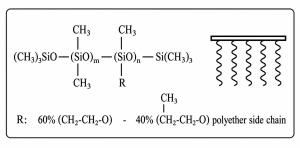
Figure 1. Structure of a silicone surfactant in polyurethane foam
Selection of Silicone Surfactants for Different Types of Polyurethane Foam
Conventional Polyether Systems
Conventional polyether systems require good stability and processability. Therefore, the molecular weight of the polyether/siloxane system should be relatively high and may range from 20,000 to 80,000 g/mol. Long grafted polyether chains and a higher polyoxypropylene content are also important in these systems.
Polyester Systems
Polyester systems have greater stability than conventional systems and therefore require silicone surfactants with a lower molecular weight. These surfactants help provide an appropriate cell structure and improve air emulsification and mixing.
Flexible polyester foam requires a surfactant with lower activity, a molecular weight of approximately 500 to 1,500 g/mol, and shorter polyether chains.
HR Systems and Flexible Molded Foam
HR systems have good stability due to the high reactivity of the polyols and the presence of cross-linkers. An open-cell structure is particularly important in these systems. Therefore, silicone surfactants with low-molecular-weight siloxane and polyether segments are suitable.
For flexible molded foam, a low-molecular-weight silicone surfactant in the range of approximately 300 to 1,500 g/mol can be used.
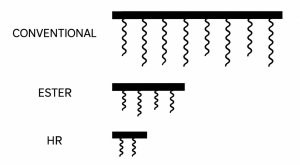
Figure 2. Silicone surfactant structure for flexible polyurethane foam
Silicone Surfactants in Rigid Polyurethane Foam
Silicone surfactants used in rigid foam should have higher surface activity than those used in flexible foam. These surfactants may have a molecular weight between 1,500 and 15,000 g/mol and can contain hydrophilic polyoxyethylene polyether chains grafted onto hydrophobic PDMS.
Role of Silicone Surfactants in the Drainage Phenomenon
Thinning of the common wall between bubbles due to factors such as temperature, drainage, and capillary action can lead to cell-wall rupture. This effect may spread to neighboring cells and eventually cause cracks in the foam or even complete foam collapse.
The surfactant should promote liquid movement toward the thinned region and help restore the appropriate thickness of the cell wall. It also helps stabilize or reduce surface-tension gradients within the cell walls, thereby improving film stability.
Under these conditions, the surface layer can move from regions of lower surface tension toward regions of higher surface tension, helping the film return to an appropriate thickness.
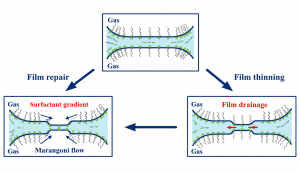
Figure 3. Role of silicone surfactant in the drainage phenomenon
Cloud Point of Silicone Surfactants
The lower the cloud point temperature of a surfactant, for example around 25°C or below, the stronger its bubble-nucleation capability may be. In contrast, a higher cloud point, such as a temperature close to 90°C, may indicate better emulsification and dispersion properties.
Because the cloud point test is performed in water, it provides information about the interaction of the surfactant with water and its degree of hydrophilicity.
If the cloud point occurs at a high temperature, close to 90°C, phase separation between the surfactant and water takes place at a higher temperature. This indicates greater hydrophilicity and a higher proportion of ether segments, which can improve miscibility within the system.
In contrast, when the cloud point occurs at a lower temperature, close to 25°C, the surfactant is more hydrophobic and contains a lower proportion of ether segments. As a result, it has a greater tendency to locate at the air-bubble interface and can act as a nucleating agent. The type of ether units, EO or PO, should also be considered in this comparison.
Therefore, the cloud point of a silicone surfactant can be used to evaluate its nucleation, emulsification, or intermediate characteristics and can facilitate the selection of a suitable silicone surfactant for a specific system.
Conclusion
Silicone surfactants are important components for controlling polyurethane foam formation and stability. Their chemical structure, the length of the siloxane and polyether chains, and the EO/PO ratio can influence nucleation, emulsification, foam stability, and cell structure.
The required surfactant also differs among polyether, polyester, HR, flexible molded, and rigid foam systems. Therefore, the appropriate silicone surfactant should be selected according to the type of foam, the production process, and the desired final properties.


