


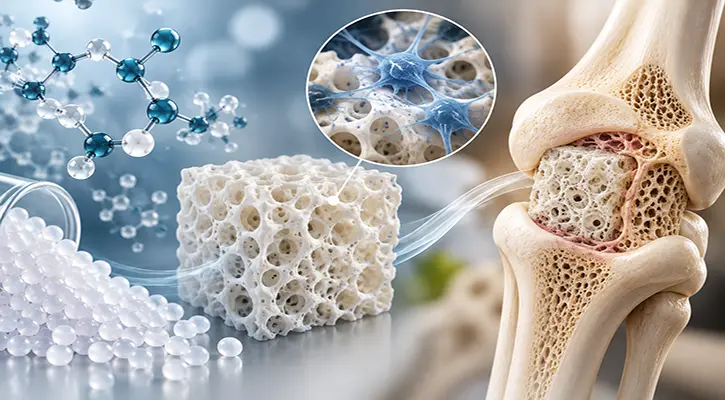
Application of Polyurethane in Bone Tissue Engineering
Application of Polyurethane in Bone Tissue Engineering
Tissue engineering (TE) was first introduced by Langer and Vacanti in 1993. Tissue engineering aims to assist in the regeneration and repair of damaged tissues in the human body. The regeneration of damaged tissues requires three main cellular processes: proliferation, differentiation, and adhesion. The materials used to fabricate scaffolds play an important role in tissue regeneration. Scaffolds act as an artificial extracellular matrix[1] and can be made from natural or synthetic polymers. Synthetic polymers have gained considerable popularity as scaffold materials because they are cost-effective and relatively easy to process and use in contact with damaged tissues. Despite the possibility of immune system stimulation or cytotoxicity depending on the type of polymeric material used, these materials are widely applied in medical fields and drug delivery because of desirable properties such as degradation rate, porosity, and mechanical characteristics. They also possess predictable mechanical properties such as strength, elasticity, and degradation rate. Synthetic polymers used in scaffold fabrication are often combined with natural polymers such as proteins. For example, PGA (polyglycolic acid) is a linear polyester with a relatively high degradation time. Since its by-product, glycolic acid, can be eliminated from the body through urine, it is considered safe. However, to increase the degradation rate of PGA for the repair of bone defects, composites of PGA with natural polymers such as collagen can be prepared, which have shown acceptable results, for example in rabbit skull defects.
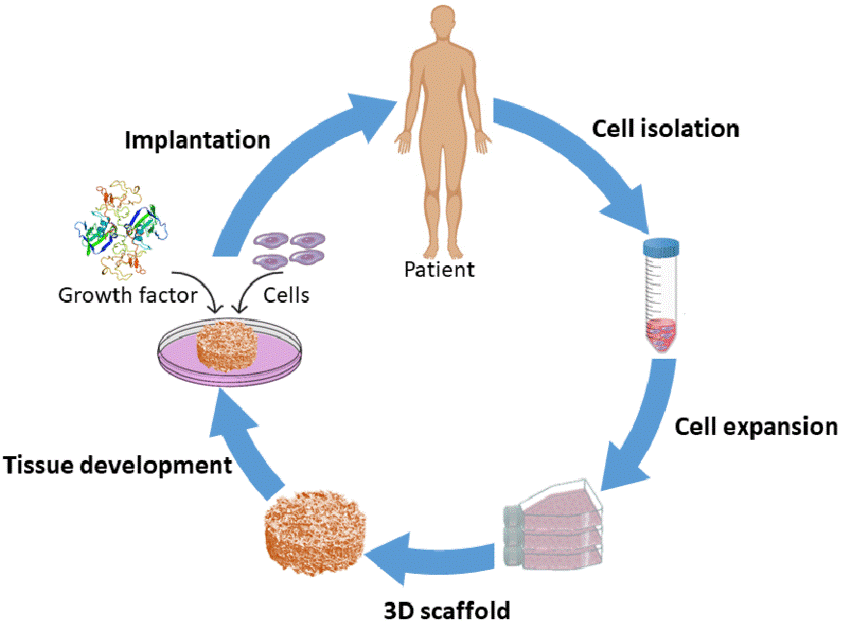
Figure 1. General schematic of tissue engineering applications in the body
[1] ECM: Extracellular Matrix
Polyurethane in Bone Tissue Engineering and Scaffold Fabrication
Polyurethane is one of the synthetic polymers used to reinforce tissue-engineering scaffolds due to its favorable characteristics, including biocompatibility, biodegradability, excellent oxidative stability, and suitable mechanical properties. Depending on the structure of PU and the different molecular weights of its constituent materials, polyurethane can exhibit a highly flexible structure.
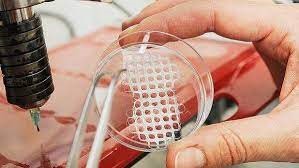
Figure 2. General structure of a scaffold used in the body
Due to their beneficial properties, electrospun PU fibers are widely used in skin and bone grafting applications.
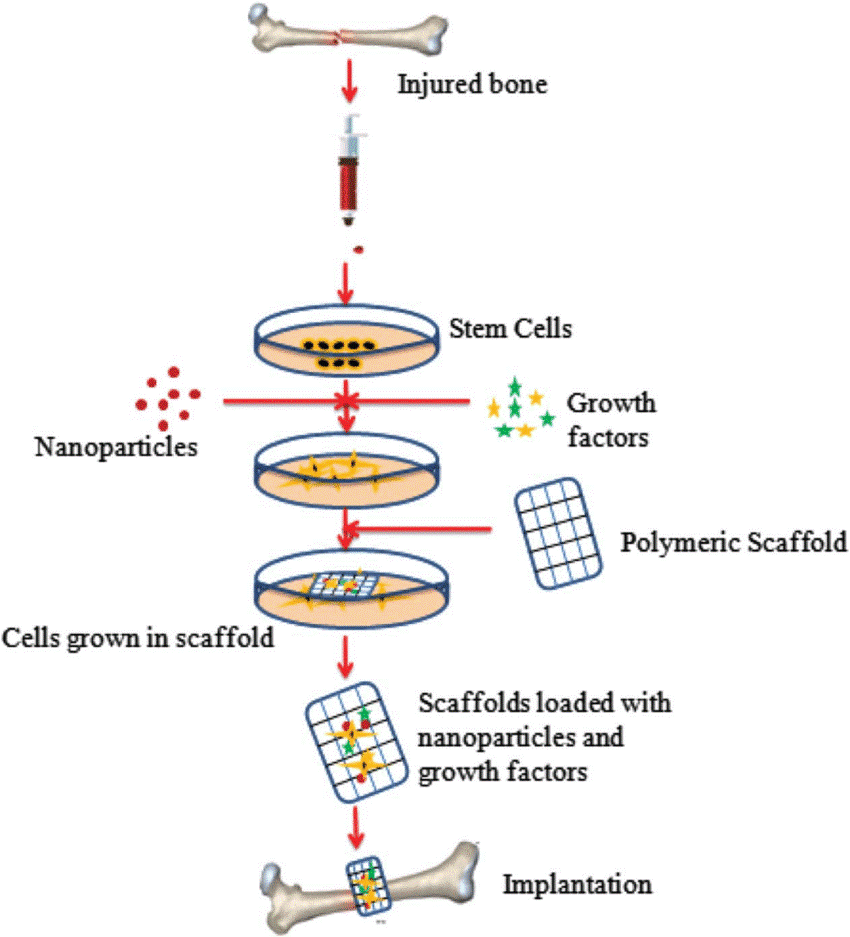
Figure 3. Overview of the process of using polymers and nanoparticles in tissue engineering
Biodegradable aliphatic polyesters such as polylactic acid (PLA), polycaprolactone (PCL), and polybutylene succinate (PBS) are widely used as polyol bases in PU. However, because of their limited mechanical properties, physical and chemical modifications are often required. Among these polyesters, PBS can be obtained from bio-based resources and can provide a good balance between thermal and mechanical properties. The properties of PBS include high crystallinity, a low crystallization rate, low melt strength, and low tear resistance. To improve its mechanical properties, polybutylene succinate is copolymerized with polytetramethylene glycol (PTMG) using different PTMG contents of 5, 10, 20, 30, 40, 50, 60, and 70%. In this copolymerization process, PBS acts as the hard segment and PTMG as the soft segment. The resulting copolymer is referred to as PBSTMG. The following sections examine several properties of these samples.
Mechanical Properties
Table 1 shows the properties of PBS, the PBSTMG copolymer, and PBS/PBSTMG compositions at different ratios. The tensile strength of the PBSTMG copolymer decreases when the PTMG polyol content is 10% or lower. In addition, elongation at break and impact strength improve considerably as the PTMG content increases. In particular, at a PTMG content of 10%, the impact strength of the copolymer is approximately 4.5 times higher than that of PBS.
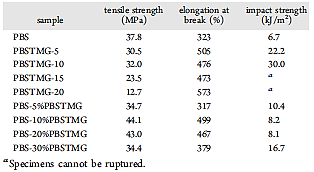
Table 1. Mechanical properties of PBS, PBSTMG, and PBS-PTMG compositions
Analysis of Melting and Crystallization Behavior
DSC analysis produced two curves in Figure 1: curve (a) represents cooling, while curve (b) represents heating. As the PTMG content increases, the melting temperature, crystallization temperature, and degree of crystallinity decrease. With increasing PTMG content, the crystallization peak gradually decreases, and at 20% PTMG only a very small peak can be observed. Therefore, copolymerization directly affects crystallinity.
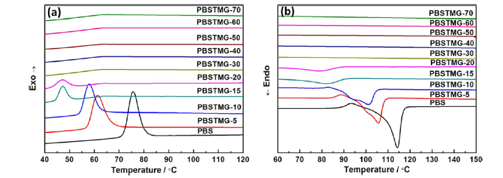
Figure 1. DSC analysis of PBS and PBSTMG copolymer at a rate of 10°C/min for both curves
For a conventional PBS-based copolymer, the introduction of a third monomer has a significant effect on melting point and crystallinity. Through copolymerization, the length of the crystallizable segments decreases and foreign units are excluded from the crystalline lattice. As the comonomer content increases, the thickness of the PBS lamellae decreases. The melting and crystallization temperatures also decrease with the introduction of the third monomer.
Thermal Stability Analysis
Thermogravimetric analysis (TGA) is particularly important for evaluating the practical performance of the produced material and is carried out under a nitrogen atmosphere. According to the graph, the thermal stability of PBS and the other copolymers containing different percentages of PTMG is very similar. Therefore, it can be concluded that copolymerization has no significant effect on thermal stability.
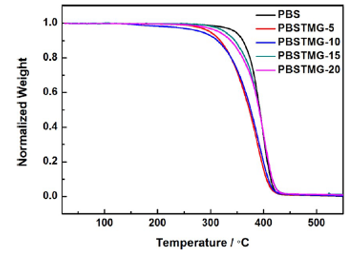
Figure 2. TGA analysis of PBS and PBSTMG copolymer under a nitrogen atmosphere at a rate of 10°C/min
Dynamic Mechanical Analysis
Dynamic mechanical analysis (DMA) is used to study the viscoelastic properties of PBS and the PBSTMG copolymer, including modulus and loss behavior. The PTMG content has a considerable effect on the modulus and glass transition temperature. In the glass-transition temperature range, restriction of molecular movement affects the modulus, and an increase is observed in all copolymers. Figure 3a shows that as the PTMG content increases, the modulus and modulus peak increase. Figure 3b shows that with increasing PTMG content, the peak becomes narrower and shifts toward lower temperatures, from -42.9°C to -67.4°C. At PTMG contents of 10%, 15%, and 20%, two peaks are observed in the loss curve, indicating phase separation within the copolymer.
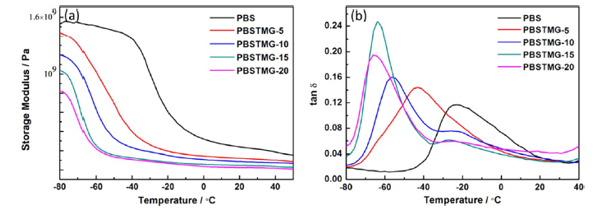
Figure 3. Effect of temperature on (a) modulus and (b) loss behavior of PBS and PBSTMG copolymer
Crystalline Structure Analysis (WAX)
This test is used to investigate the physical characteristics of the copolymer. According to the graphs, the positions of the peaks remain unchanged because PTMG does not modify the crystalline lattice. However, as the PTMG content increases, the peaks become less pronounced and their intensity decreases. This result is also consistent with the findings obtained from DSC analysis.
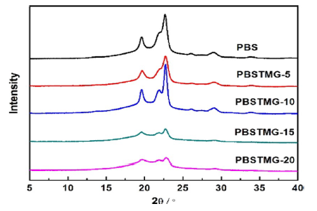
Figure 4. X-ray diffraction of PBS and PBSTMG copolymer at different PTMG contents
Scaffold Fabrication Methods in Bone Tissue Engineering
Several methods have been used to fabricate and design suitable scaffolds, including phase separation, gas foaming, freeze-drying emulsion, solvent casting, and electrospinning.
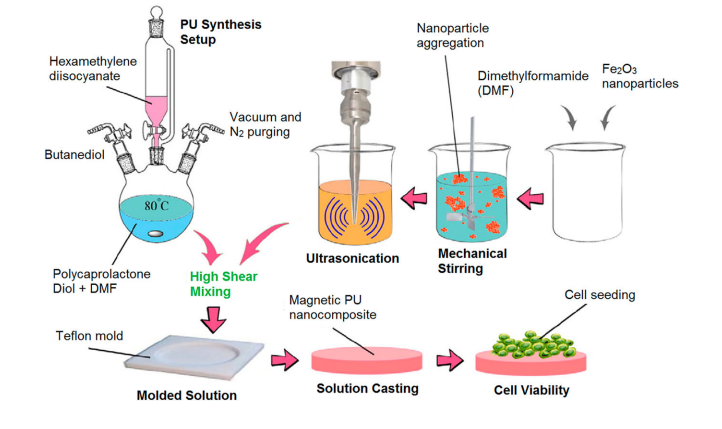
Figure 4. Scaffold fabrication process using polyurethane raw materials and the addition of nanoparticles
The figure above provides a brief overview of the polymerization process and the addition of isocyanate, as well as the incorporation of nanoparticles, which can significantly improve mechanical properties. The final product can ultimately be used in drug-delivery applications.
Conclusion
The application of polyurethane in bone tissue engineering has attracted considerable attention because its mechanical properties can be tailored and because of its biocompatibility and suitability for scaffold fabrication. One method for improving the mechanical properties of polyurethane is the copolymerization of polyester and polyol. Based on the findings reviewed, polyurethane foams can provide highly desirable properties for bone scaffolds and can be processed into these products using different methods. Therefore, the application and study of polyurethane in bone tissue engineering continue to receive significant attention.
References:
- Javid‐Naderi, M.J., Behravan, J., Karimi‐Hajishohreh, N. and Toosi, S., 2023. Synthetic polymers as bone engineering scaffold. Polymers for Advanced Technologies.
- Wu, S., Zhang, Y., Han, J., Xie, Z., Xu, J. and Guo, B., 2017. Copolymerization with polyether segments improves the mechanical properties of biodegradable polyesters. ACS Omega, 2(6), pp.2639-2648.
- Joseph, J., Patel, R.M., Wenham, A. and Smith, J.R., 2018. Biomedical applications of polyurethane materials and coatings. Transactions of the IMF, 96(3), pp.121-129.


