


Effect of Polymer Polyol (POP) or Co-Polymer Polyol on Flexible Polyurethane Foam
Effect of Polymer Polyol (POP) or Co-Polymer Polyol on Flexible Polyurethane Foam
Introduction
Flexible polyurethane foams, which are widely used in automotive seating and furniture applications, are frequently subjected to compressive loads and therefore require considerable load-bearing capacity. To improve their mechanical properties, fillers can be incorporated into the polyol system. The addition of fillers to polyols used in flexible foam formulations can also promote nucleation and facilitate cell opening. These fillers may be either inorganic or organic. Common inorganic fillers include BaSO4 and CaCO3. Organic fillers, on the other hand, can be synthesized through various polymerization methods, including condensation, in-situ, and free-radical polymerization. Polymer polyols belong to this category of organic fillers and can be produced through free-radical polymerization using continuous, semi-continuous, or batch processes.
Structure of Polymer Polyols
A polymer polyol is a specially synthesized polyol containing dispersed polymer particles, typically based on styrene, acrylonitrile, or styrene-acrylonitrile (SAN), within a polyether polyol matrix. The presence of these polymeric components can improve thermal stability and reinforce the foam structure. Due to their ability to enhance hardness and load-bearing performance, polymer polyols (POPs) are widely used in flexible polyurethane foams to improve mechanical properties such as compressive strength and load-bearing capacity. The synthesis of POP typically involves a polyether polyol, vinyl monomers, a free-radical initiator, and a chain-transfer agent. Since the vinyl polymer is insoluble in the liquid polyether phase and forms dispersed particles during graft polymerization, efficient mixing during the reaction is essential to obtain very fine and uniformly dispersed particles. Insufficient mixing can lead to aggregation and the formation of larger particles.
To improve the dispersion and stability of the polymer particles, Non-Aqueous Dispersants (NADs) are commonly used. Figure 1 illustrates a polymer polyol consisting of a solid polymer phase and a polyether phase. NADs help stabilize the interface between these two phases and promote better dispersion.
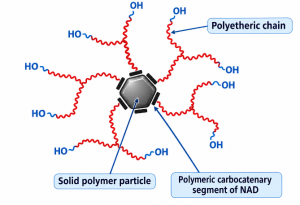
Figure 1. Solid polymer particles stabilized by NAD molecules
Properties and Characteristics of Polymer Polyols
As the solid content, particularly the SAN polymer fraction, increases, the hardness and stiffness of the resulting foam generally increase. In general, higher solid content can result in greater tensile strength and lower elongation. An increase in solid content can also contribute to higher foam density and hardness, depending on the formulation and processing conditions. In addition, cell structure may be influenced by the size and distribution of the dispersed polymer particles. The mechanical properties of the resulting polyurethane foam also depend on the type and ratio of the monomers used in the polymer phase. When acrylonitrile is used alone in graft polymerization, it presents a significant disadvantage: polymer polyols based exclusively on acrylonitrile tend to produce colored products, typically ranging from light brown to yellow. In slabstock foam production, this may result in undesirable brown discoloration, particularly in the core of the foam. Styrene alone, however, may not provide sufficient stability in the polymer polyol system. For this reason, styrene and acrylonitrile are commonly used together as an SAN copolymer. The resulting properties vary depending on the styrene-to-acrylonitrile ratio. A higher proportion of acrylonitrile relative to styrene can contribute to greater flexibility and improved resistance to cracking. Figure 2 illustrates the structure of polyurethane based on polymer polyol.
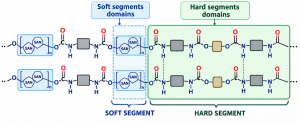
Figure 2. Structure of polyurethane based on polymer polyol
Polymer polyols, also known as graft polyols, are used in a wide range of applications, including HR (High Resilience) foam, HR slabstock foam, high-load-bearing slabstock foam, semi-flexible foam, elastomers, and coatings.
Conclusion:
Polymer polyols (POPs) are used to enhance the mechanical properties of flexible polyurethane foams. These materials contain a dispersed solid polymer phase, commonly consisting of an SAN copolymer. The solid polymer phase can improve important mechanical properties such as load-bearing capacity, hardness, and tear resistance. The final properties of the polymer polyol and the resulting polyurethane foam depend on several factors, particularly the solid content and the ratio of styrene to acrylonitrile in the SAN copolymer. Therefore, by adjusting the SAN composition and solid content of the polymer polyol, the mechanical and physical properties of flexible polyurethane foams can be tailored to meet the requirements of different applications.
References:
- Comparison of Flexible Polyurethane Foams Properties from Different Polymer Polyether Polyols
- Novel Cast Polyether Urethanes Based on Dispersed Polymeric Polyol
Polyols for Polyurethanes, Polymer polyols (filled polyols), doi.org/10.1515/9783110644104


